Not sure what safe headphone volume really means? Think of it as a weekly dose, not a single number. WHO-ITU guidance uses 80 dB for 40 hours per week for adults.
| Item | Value |
|---|---|
| Adult listening mode (WHO-ITU standard) | 80 dB for 40 hours per week |
| Child listening mode (WHO-ITU standard) | 75 dB for 40 hours per week |
| Young people at risk from recreational loud sound | More than 1 billion (ages 12-35) |
| Standard’s stated aim | Reduce the risk of hearing loss among users of personal audio products |
Figures come from the WHO-ITU safe listening standard page and the WHO Making listening safe page. Guidance can change, so check the source before you rely on these numbers.
Why headphone volume matters for your hearing
Hearing damage from loud sound is usually gradual and painless. You can feel fine after a loud commute and still be adding to a lifetime total. That is why guidance talks about exposure over time rather than a single loud moment.
WHO estimates that recreational loud sound puts over a billion people aged 12–35 at risk of hearing loss. The initiative promotes safer recreational listening across age groups. You can read it on the WHO Making listening safe page.
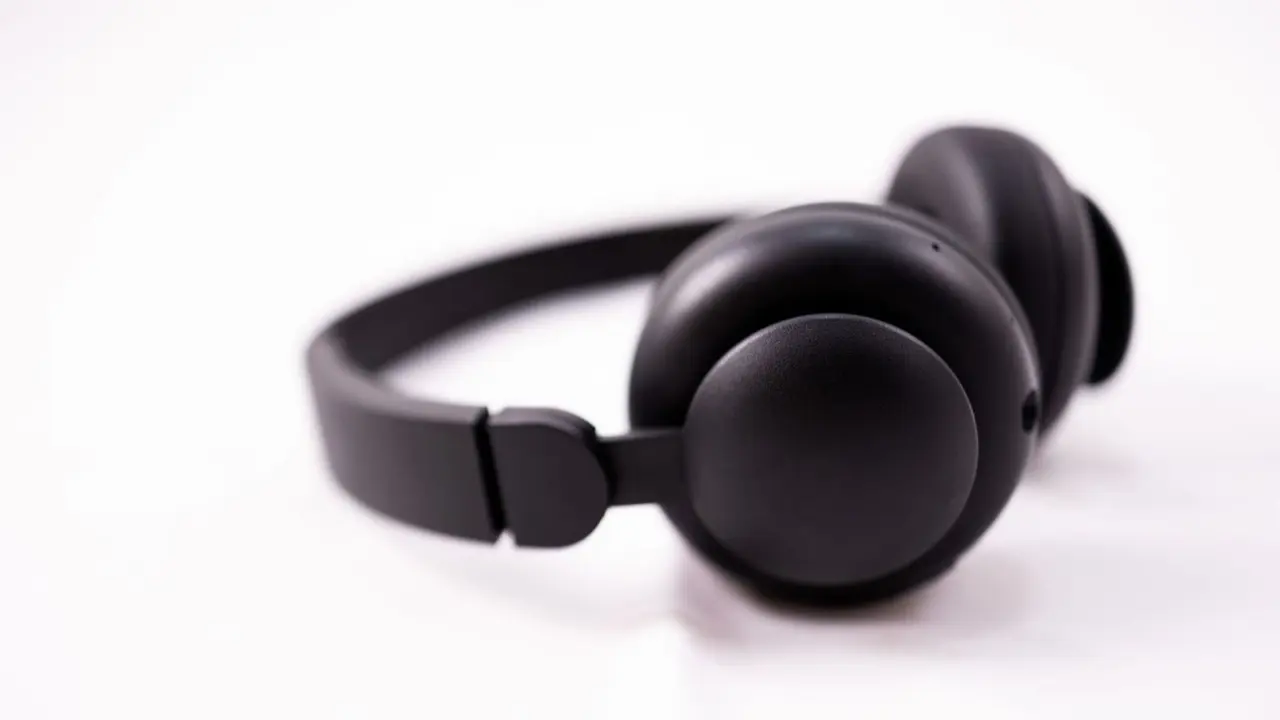
Headphones sit close to the ear, so they deserve extra attention. The type you choose changes how loud you tend to listen, which is covered in our guide to types of headphones.
What the WHO-ITU listening standard says
The WHO and the International Telecommunication Union (ITU) published a standard for personal audio devices. According to the WHO page for the standard, its aim is to reduce the risk of hearing loss among users of such products. It was developed over two years with input from government, industry, civil society and users.
The standard gives the listener a choice of two modes that set the total sound dose considered safe:
- Mode 1, for adults: 80 dB for 40 hours per week.
- Mode 2, for children: 75 dB for 40 hours per week.
Notice the lower figure for children. If a young person shares your headphones or uses your device, treat the child mode as the sensible reference.
How to think about your weekly sound dose
Sound dose depends on both the sound level and how long you listen; decibel values cannot simply be multiplied by listening time. A quieter level can be listened to for longer, and a louder level uses up your allowance faster. The WHO-ITU adult reference is 80 dB for 40 hours per week; listening time alone cannot establish whether you are within that dose.
Both occasional loud events and regular headphone listening contribute to sound exposure; loudness and duration both count.
Your phone cannot see your ears, so treat on-screen volume steps as a rough guide only. Different headphones turn the same volume setting into different real loudness, and sensitivity and impedance are part of the reason. Our explainer on headphone impedance explained shows why.
Practical habits for safer listening
You do not need a decibel meter to listen more safely. These habits work in daily life:
- Check the dose tools on your phone. Many phones and players now show a listening-level or weekly-exposure readout in their health or sound settings, and some warn you when you go over.
- Turn the volume down before you put headphones on, then raise it only until speech or music is clear.
- Choose headphones that block outside noise, so you are not tempted to turn up the volume over a train or street.
- Take listening breaks and give your ears quiet time after long sessions.
- Keep a lower limit for children and set it on the device where possible.
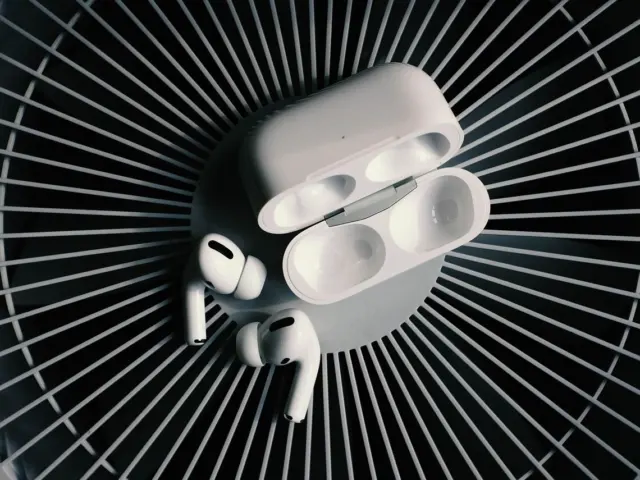
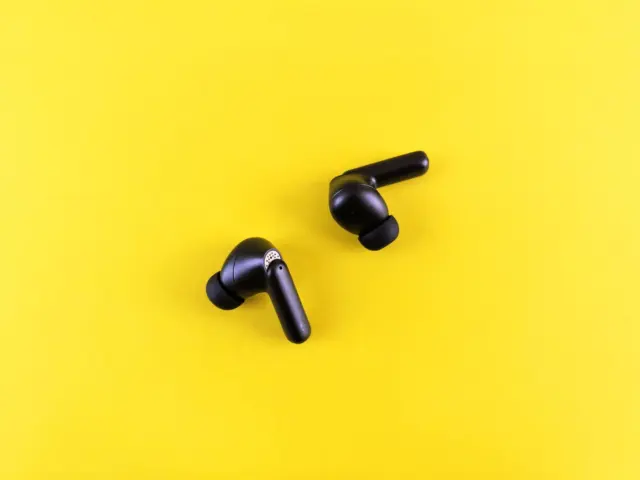
Fit matters too. A seal that keeps noise out lets you listen at a lower level, which is one reason many people look at true wireless earbuds with good ear-tip fit.
Start low and raise the level only as far as needed. With noise-blocking headphones, audibility of nearby speech is not a reliable check of playback level.
Situations that quietly push volume up
Most people do not choose a dangerous level on purpose. The environment nudges the dial for them, and the habit then sticks.
- Noisy transport: trains, buses and planes drown out quiet passages, so you raise the volume to hear them.
- Exercise: gym noise and the urge for energetic music make high levels feel normal.
- Quiet recordings: podcasts, calls and older recordings are often mastered more quietly than modern music, so a jump between tracks can be sudden.
- Loose fit: a poor seal leaks bass and lets in room noise, which invites more volume.
Spotting your own trigger is half the fix. If you always turn up on the commute, that is the moment to lean on noise blocking and a lower starting level.
Choosing and setting up gear with your ears in mind
Gear will not protect you by itself, but good choices make safe listening easier. Look for comfortable fit, a reliable seal and a volume control that moves in fine steps at the low end.
Some phones and players also let you cap the maximum output. Setting a ceiling is a sensible step for shared devices and for children, because it removes the temptation to push the level in a noisy place.
Open-back designs generally let in more outside sound than sealed, closed-back designs. Neither type is automatically safer, so judge by how loud you end up listening in your usual surroundings.
Warning signs and when to get checked
Ringing in the ears, muffled sound after listening, or needing the volume higher than before are all signals to ease off. They can show that your ears are under strain.
Do not wait for pain. Early changes in hearing can be subtle, and lost hearing from loud exposure does not tend to come back, which is why prevention is the whole game. Make a habit of noticing how your ears feel after a long session.
If these signs persist, or you notice trouble following conversation, see a qualified hearing professional or doctor. This site is educational only and cannot diagnose or treat hearing problems.
Frequently asked questions
What is a safe headphone volume?
Show answer
There is no single setting that fits every device. The WHO-ITU standard describes a weekly dose of 80 dB for 40 hours per week for adults and 75 dB for 40 hours per week for children, as stated on the WHO page.
Is the same volume safe for children?
Show answer
The WHO-ITU standard sets a lower child mode of 75 dB for 40 hours per week, so children should listen quieter than adults.
Can I tell by ear if my volume is too high?
Show answer
Not reliably. Damage is often painless and gradual, so use your device’s listening-level readout and the warning signs above as a check.
Do noise-blocking headphones help?
Show answer
They can, because blocking outside noise means you are less likely to raise the volume to compensate.